During a cabinet factory visit, buyers should verify whether the supplier’s stated materials, processing methods, quality checks, sample approvals and project coordination process are actually reflected in the facility and supporting documents.
A factory visit can provide stronger first-hand evidence than any remote check — and it is also the most misunderstood step in supplier verification. Seeing a production floor tells you what a factory can do. It does not, by itself, tell you what your order will get. Samples, inspections and records answer that second question. Keep both ideas in mind as you read: this checklist teaches you how to gather evidence on site, not how to be impressed by a tour.
If you have not yet shortlisted your suppliers, start with our guide to evaluating a custom cabinet manufacturer in China — it covers remote screening, quotations and evidence. This article covers what to do once a factory is worth visiting.
1. Before the Visit: Give It a Job
An unfocused visit produces impressions; a prepared visit produces evidence. Before you book flights, write down:
- Objectives: which risks must this visit retire? (e.g. confirm the factory exists, verify engineering depth, check QC discipline)
- Scope: which areas, processes and records are in scope — production floor, material warehouse, sample room, QC stations, packing area
- Documents to bring: your specification sheet, shop drawings or layout, and a printed copy of this checklist
- Questions list: prepare them in advance (see Section 9) so nothing important is left to memory
- Who you will meet: confirm that engineering and QC staff — not only sales — will be available
Share your objectives with the factory in advance. A transparent manufacturer should be able to accommodate a structured visit; one that resists specifics is telling you something before you arrive.
2. Can't Fly There? Verify Remotely
Most overseas buyers cannot visit every shortlisted factory. Two alternatives can cover many of the same verification points:
- Live video audit: a real-time walkthrough on a video call — not a recorded reel. Ask the host to go where you point: material racks, a running machine, the QC station, the packing area. If they steer you back to the showroom, note it.
- Third-party inspection: an independent inspector visits against your checklist and reports with photos. Useful before shipment as well as before commitment.
Remote verification follows the same checklist below — the questions don't change, only the medium does.
3. Is It a Real Factory?
Start with evidence that is difficult to verify from a brochure alone:
- Production floor, not just showroom: machines should be running, workers present, material moving. An empty, silent floor during working hours is a red flag.
- Material flow: follow the path from raw panel storage through cutting, edge-banding and assembly. A coherent flow indicates real production; disconnected stations suggest assembly-only or subcontracting.
- People: look for engineering and QC staff on site, not only salespeople. Ask who signs off drawings and who stops a defective batch.
- Business license: check that the registered name and address match the company you contracted with — especially if a trading company is involved.
4. Engineering on Site
Renderings sell; engineering delivers. On site, verify:
- Shop drawings: ask to see real shop drawings from recent orders — dimensions, materials, hardware positions, edge details. Vague drawings on site mean vague production.
- Sample room: physical samples of materials, finishes and hardware should exist and be organized, not improvised for your visit.
- Revision discipline: ask how drawing changes are recorded and who approves them before production. The answer should be a process, not a person.
For how drawing approval should work in writing, see our drawing approval checklist.
5. Materials and Hardware: Check the Racks and the Paperwork
At the material warehouse and on the floor, check:
- Panel storage: substrate types and grades should be labeled by batch. Ask what the labels mean and how batches are traced to orders.
- Emission documentation: ask what formaldehyde emission class their panels are documented at (e.g. what ENF/E0 means in their paperwork) and whether test reports are available.
- Hardware: brand and model should be identifiable on the shelf — not just "soft-close". Ask for the datasheet, not the brochure.
- Consistency: compare what you see on the racks with what their quotation promised. Discrepancies between documents and the floor are audit red flags.
For how material specifications are normally structured, see Materials & Specifications.
6. QC Checkpoints Worth Seeing
Quality is a process, not a promise. Look for the checkpoints themselves:
- Incoming inspection: is there a station or procedure for checking incoming panels and hardware?
- In-process checks: who checks dimensions and edge quality during production, and how are results recorded?
- Pre-shipment inspection: ask to see the inspection area and a recent inspection record. Then ask: what happens when a defect is found?
The defect-handling answer matters more than the certificates on the wall. A factory that can describe its rework and rejection process has a real one.
7. Capacity and Scheduling: Fit, Not Headlines
Do not judge capacity by machine count or floor size alone. What matters is fit with your order:
- Current load: ask what is on the floor now and how your order would be scheduled around it.
- Bottleneck stations: every factory has one — edge-banding, finishing, packing. Ask where it is and how they manage it.
- Change tolerance: ask how they handle rush changes or volume adjustments mid-order. The answer reveals planning discipline.
Be cautious of exact capacity figures in any marketing material, including on-site claims. What you need is evidence that the scale you see matches the order you plan to place — not a number.
8. Packing, Labeling and Loading
Cabinets are damaged in transit more often than in production. Check:
- Packing standards: corner protection, wrapping, carton strength — ask what is standard versus an upgrade.
- Labeling: cartons should carry project, room and item identification. Ask how they prevent mix-ups across orders.
- Loading records: ask whether container loading is photographed and documented, and whether you receive the loading record.
See how a factory documents its capability: CACAR Manufacturing Capability — production, engineering and QC as we present them to project buyers.
9. Questions to Ask on Site
Bring this list. The quality of the answers matters more than the smoothness of the tour:
- Who holds engineering responsibility for my order — a named person or "the team"?
- Can you show me shop drawings from a recent comparable order?
- What is documented at each QC checkpoint, and may I see a recent record?
- What happens — step by step — when a defect is found?
- How are material batches traced to specific orders?
- What is your current production load, and where would my order sit in the schedule?
- How are drawing revisions recorded and approved before production?
- What does your standard export packing include, and what is documented at loading?
- Who is my single technical point of contact after the visit?
- May I contact two client references in my market?
10. After the Visit: From Observations to a Decision
One visit shows you one day, not every day. Turn observations into a decision with discipline:
- Separate what you saw from what is missing: write down both. "Saw running CNC lines" is evidence; "did not see incoming inspection records" is a gap to close, not a failure to assume.
- Close the gaps in writing: request the missing documents — test reports, inspection records, references — after the visit. A factory that showed you everything but sends nothing afterwards has told you something.
- Cross-check against your shortlist: judge every visited factory with the same checklist and the same questions. Consistency is what makes comparison valid.
- Decide what the visit cannot decide: no visit proves future on-time delivery or zero defects. Link payment milestones to verifiable evidence — approved samples, inspection reports, loading records — not to impressions.
Planning a factory visit and want a second opinion on your checklist? Contact us — send your project requirements and we will walk through what to verify.
11. How CACAR's Factory Evidence Maps to This Checklist
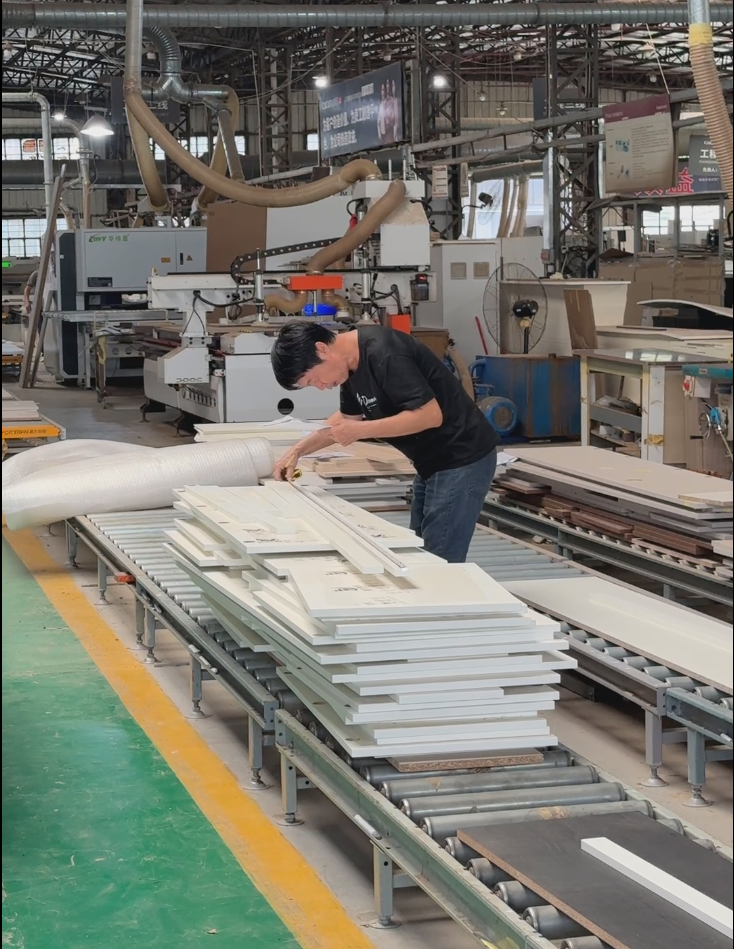
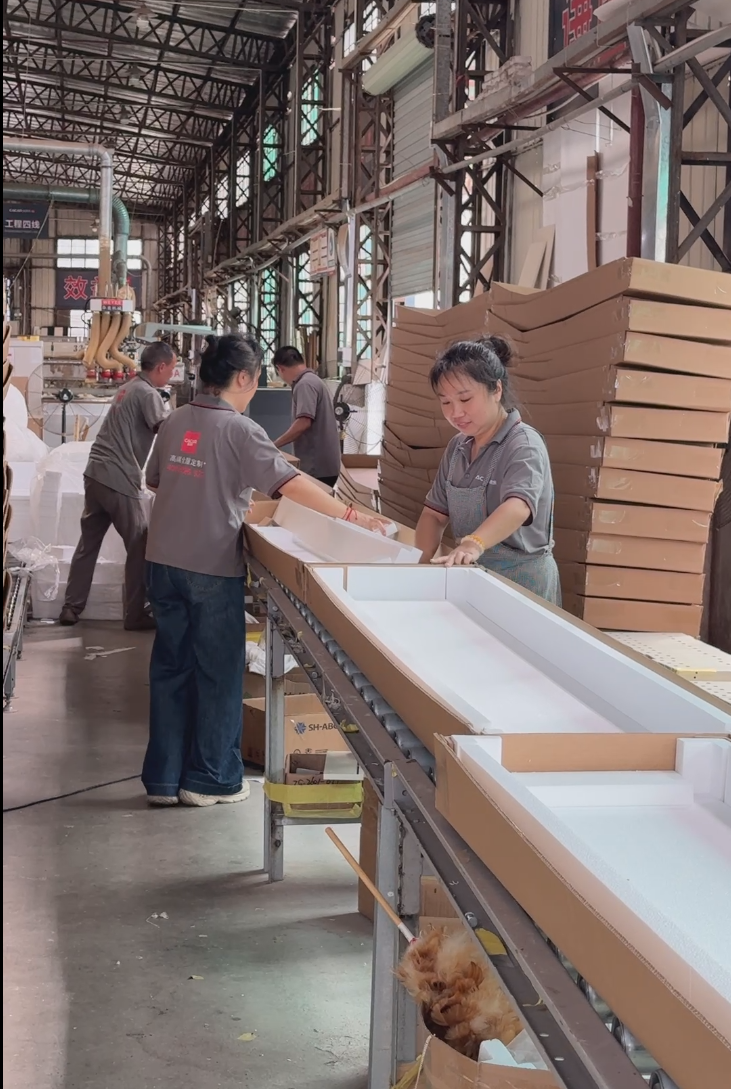
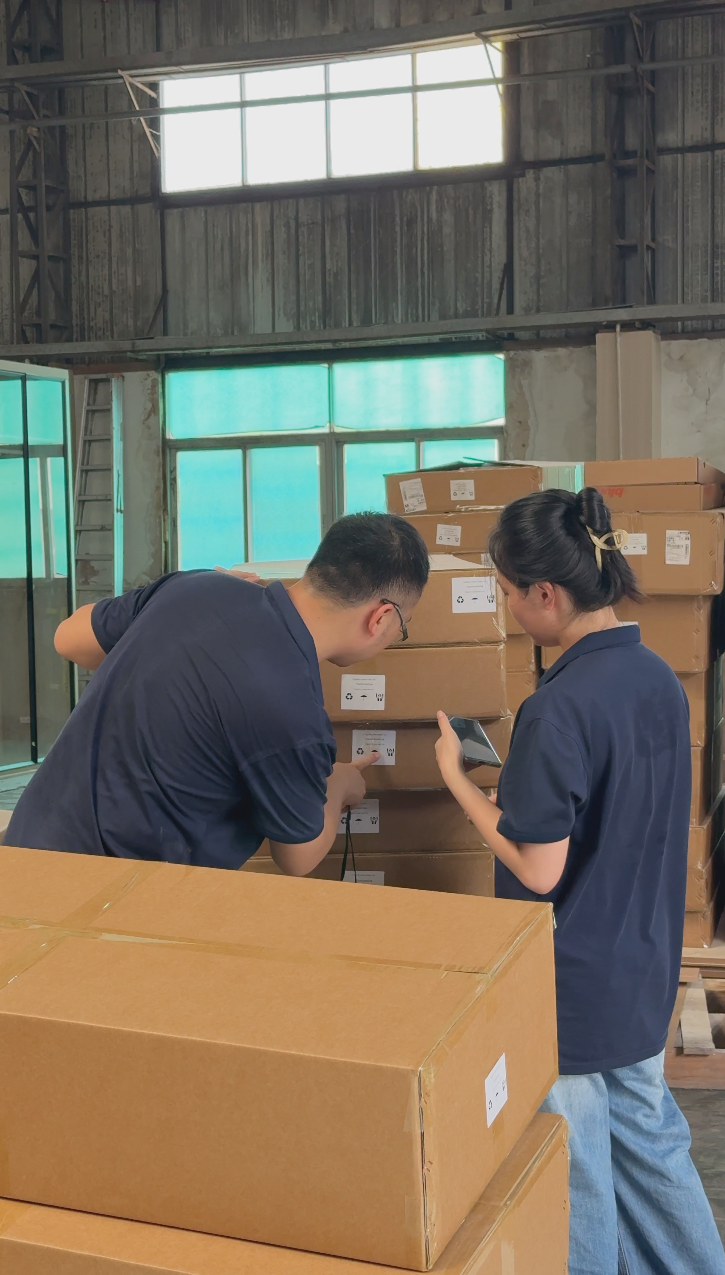
The checklist above is also how we document our own factory for buyers. Where the pictured evidence is ours: the production floor photo (Section 3) shows the pictured production environment; the QC photo (Section 6) shows the inspection activity at the pictured stage; the packing photo (Section 8) illustrates the packing and loading activity shown. These images document what is shown — they do not by themselves prove capacity, lead times, or process consistency across all orders; use the checklist above to verify us the same way. Our manufacturing and QC documentation is at Manufacturing Capability, material and hardware standards at Materials & Specifications. Judge us with the same ten questions.
Sources
Frequently Asked Questions
Do I have to visit the factory in person, or is a live video walkthrough enough?
It depends on your order size and risk. For large or long-term orders, an in-person visit (or a third-party audit) is worth it. For smaller orders, a live video walkthrough following the same checklist — where you direct the camera — can cover many of the same verification points. What matters is the structure of the verification, not the travel.
What should I prepare before a factory visit?
Your specification sheet, drawings or layouts, a printed checklist, and a written list of objectives: which risks must this visit retire. Confirm in advance which areas and records are in scope and that engineering and QC staff will be available — not only sales.
What if the factory won't let me see something on my checklist?
Treat the refusal as data. Note exactly what was withheld and ask for it in writing after the visit. A pattern of refusals across key areas (engineering, QC records, material traceability) is itself a finding — and a reason to keep the supplier off your shortlist.
Can one visit guarantee my order's quality?
No. A visit assesses what the factory is capable of on the day you see it; it does not guarantee future performance or the quality of every order. Protect each order separately with approved samples, defined QC checkpoints, and payment milestones tied to verifiable evidence.
Should I hire a third-party inspector instead of visiting myself?
They serve different purposes and work well together. Your own visit builds the relationship and lets you judge engineering depth firsthand; a third-party inspector provides independent, documented evidence — especially useful for pre-shipment checks on every order. For high-value orders, use both.
A factory visit should produce verifiable findings, not only photographs. Buyers should record the evidence reviewed, unresolved questions and follow-up actions before approving the supplier.


